Below is the final for the Aldrich-Munger taught course, "American Values and Institutions," PS112A.
The kids had to answer some three of the five questions, their choice.
Afterwards, three kids had editorial comments:
a. "I hate you, and I always will."
b. "I can't feel anything, including my fingers."
c. "Somewhere in the second hour of the exam, I was struck by just how much I had learned this semester."
The exam, for your amusement:
1. Assume that you are a member of a three person committee with the following preferences over the set of outcomes (x, y, z):
(First,Second,Third) Rank in preference order
Person I (you) x y z
Person II y z x
Person III z x y
a. This committee decides by comparing two alternatives (akin to a bill and a proposed amendment) with the majority rule winner in the first vote pitted against the remaining alternative. The majority winner from that second vote is the overall winner. Remembering that you are "Person 1," suppose you got to choose which two alternatives are pitted against each other, with the winner in that comparison then being voted up or down for final passage against the remaining alternative that goes against the winner. What agenda, or sequence of pairwise comparisons, would you choose?
b. Now, suppose that you suddenly become, through some odd transubstantiation of mind/soul, Person II. How would you vote, assuming that the agenda you laid out in your answer to a is held fixed? What would be the outcome? That is, which alternative should win?
c. Finally, suppose that the transubstantiation happens again, and your mind/soul returns to its original body, Person I. Having inhabited Person II briefly, you know what Person II is going to do. Do you change the agenda you picked for item a above?
2. The political thought well-known to the American Founders had a variety of perspectives on the nature of the state, and the obligations of the individual to the state. Summarize what you see as the primary thinkers in the "collectivist" (focusing on the state, and the federal government) tradition in the political thought before 1830, and the primary thinkers of the "individualist" tradition (focusing on private rights, and local government). Make sure and mention at least two of each. Which set of values, collectivist or individualist, does the American Constitution come closer to embodying?
3. Consider the following analogy: Condorcet's Paradox is to Majority Rule as Arrow's Theorem is to the Set of All Voting Rules. Can we really say that one set of rules is better than another, given this problem? Is the American system of elections, with two major parties, better than other systems because it is more stable? Or is it rigid? How could you evaluate a political system, except by comparing it to other systems in terms of stability and survival? How does the U.S. system solve the problem of instability, using a "first past the post" electoral system, and "one issue at a time" procedures in the legislature?
4. Property. What is the role of property, and protection of property rights, in the institutions created by the American Founding? What is the basis of the claim of individuals to "own" property? How did the Founders adapt this notion of property to extend to the ownership of other human beings?
5. One of the key problems that any set of institutions, or any social movement, must overcome is the collective action problem. In many of the things we read, including Aldrich's "Why Parties?", King's "Letter from a Birmingham Jail," Walker's "Appeal," and others, the collective action problem was central to the concerns of the writer. And, collective action problems in taxation and military coordination were central to the change from the Articles of Confederation to the Constitution. Why is the collective action problem so hard to solve? Is the only solution to the collective problem to use "Madisonian" institutional incentives? Or is it possible to cajole and persuade people to act collectively on their own, as a "Rousseauvian" approach might suggest?
Wednesday, April 30, 2008


Just this one last time and I swear I'll never do it again.
Our text today is a phrase commonly uttered by:
Alcoholics, Pyromaniacs, Philanderers, and the US Fed Chairman?
Don't get me wrong, I think Bernanke and the Fed have done a great job addressing the credit freeze by expanding liquidity, taking shakier paper for collateral, opening the discount window wider, and yes even by having a hand in the Bear-Sterns sale (though this last achievement I agree is debatable).
However, the rate-cutting is just plain out of hand. The dollar is shot, commodity prices soaring, inflation is over 4%, the markets have been calmed, but the Fed is gonna cut the funds rate again.
Why?
"Hi, I'm Ben and I'm addicted to negative short term interest rates"? probably not.
I honestly think this is another paradoxical case of the Fed caving in to political pressure in order to save its vaunted independence.
Dude, I Can't Find My Probable Cause
A most excellent story, and video.
Q: Don't the cops have anything better to do?
A: No.
(Nod to Alex H)
Q: Don't the cops have anything better to do?
A: No.
(Nod to Alex H)
Letting Slept Dogs Lie
Someone from Romania came to the KPC site through this search on GOOGLE:
"Cry havoc and let slept the dogs of war..."
I guess if you should let slept dogs lie, you shouldn't cry "havoc!" I hope GWBush reads this.
"Cry havoc and let slept the dogs of war..."
I guess if you should let slept dogs lie, you shouldn't cry "havoc!" I hope GWBush reads this.
Lame Ducks as a Natural Experiment
Partisanship, the Electoral Connection, and Lame-Duck Sessions of Congress,
1877–2006
Jeffery Jenkins & Timothy Nokken
Journal of Politics, April 2008, Pages 450-465
Abstract:
We disentangle constituent and partisan influences in Congress by taking advantage of a largely unexamined institutional setting—lame-duck sessions. Lame-duck sessions of Congress are comprised of exiting members, who are freed from both constituency and party constraints, and returning members, who face a significantly reduced constituency constraint but a still strong party constraint. Comparing exiting and returning House members thus provides meaningful leverage in assessing the constraining influence of party. In the regularly occurring lame-duck sessions between 1877 and 1933, exiting House members exhibited greater movement away from the median party position than did returning members, consistent with expectations regarding party influence. In addition, party leaders’ ability to apply pressure was significantly reduced in lame-duck sessions due to the presence of a large group of exiting members. Finally, majority-party leaders were able to exercise negative agenda control in lame-duck sessions when their party maintained control of the next Congress, but they often acted to roll their own party members (an occurrence we dub a “strategic roll”) when their party lost control of the next Congress, as a way to minimize policy loss. In the post-1933 era, after the passage of the 20th Amendment, lame-duck sessions (those portions of the second session that stretch beyond the November elections) are more accurately characterized as extensions of regular sessions, with party leaders’ ability to pressure members and exercise negative agenda control remaining virtually constant across sessions. Lower levels of turnover in the modern era appear to contribute to an enhanced ability of majority-party leaders to wield influence.
(Nod to KL)
1877–2006
Jeffery Jenkins & Timothy Nokken
Journal of Politics, April 2008, Pages 450-465
Abstract:
We disentangle constituent and partisan influences in Congress by taking advantage of a largely unexamined institutional setting—lame-duck sessions. Lame-duck sessions of Congress are comprised of exiting members, who are freed from both constituency and party constraints, and returning members, who face a significantly reduced constituency constraint but a still strong party constraint. Comparing exiting and returning House members thus provides meaningful leverage in assessing the constraining influence of party. In the regularly occurring lame-duck sessions between 1877 and 1933, exiting House members exhibited greater movement away from the median party position than did returning members, consistent with expectations regarding party influence. In addition, party leaders’ ability to apply pressure was significantly reduced in lame-duck sessions due to the presence of a large group of exiting members. Finally, majority-party leaders were able to exercise negative agenda control in lame-duck sessions when their party maintained control of the next Congress, but they often acted to roll their own party members (an occurrence we dub a “strategic roll”) when their party lost control of the next Congress, as a way to minimize policy loss. In the post-1933 era, after the passage of the 20th Amendment, lame-duck sessions (those portions of the second session that stretch beyond the November elections) are more accurately characterized as extensions of regular sessions, with party leaders’ ability to pressure members and exercise negative agenda control remaining virtually constant across sessions. Lower levels of turnover in the modern era appear to contribute to an enhanced ability of majority-party leaders to wield influence.
(Nod to KL)
Political Contributions and Congressional Voting
Bribery or Just Desserts? Evidence on the Influence of Congressional Voting
Patterns on PAC Contributions from Exogenous Variation in the Sex Mix of
Legislator Offspring
Dalton Conley & Brian McCabe
NBER Working Paper, March 2008
Abstract:
Evidence on the relationship between political contributions and legislators' voting behavior is marred by concerns about endogeneity in the estimation process. Using a legislator's offspring sex mix as an exogenous variable, we employ a two-stage least squares estimation procedure to predict the effect of voting behavior on political contributions. Following previous research, we find that a legislator's proportion daughters has a significant effect on voting behavior for women's issues, as measured by score in the "Congressional Record on Choice" issued by NARAL Pro-Choice America. In the second stage, we make a unique contribution by demonstrating a significant impact of exogenous voting behavior on PAC contributions, lending credibility to the hypothesis that Political Action Committees respond to legislators' voting patterns by "rewarding" political candidates that vote in line with the positions of the PAC, rather than affecting or "bribing" those same votes -- at least in this high profile oolicy domain.
My question: Do the authors realize they misspelled "just deserts"? Is it a pun? If so, I don't get it.
"Just Desserts" is a fine name for a pastry shop, provided they don't also sell sandwiches. Then it would be "Not Just Desserts, But Also Sandwiches."
(nod to KL)
Patterns on PAC Contributions from Exogenous Variation in the Sex Mix of
Legislator Offspring
Dalton Conley & Brian McCabe
NBER Working Paper, March 2008
Abstract:
Evidence on the relationship between political contributions and legislators' voting behavior is marred by concerns about endogeneity in the estimation process. Using a legislator's offspring sex mix as an exogenous variable, we employ a two-stage least squares estimation procedure to predict the effect of voting behavior on political contributions. Following previous research, we find that a legislator's proportion daughters has a significant effect on voting behavior for women's issues, as measured by score in the "Congressional Record on Choice" issued by NARAL Pro-Choice America. In the second stage, we make a unique contribution by demonstrating a significant impact of exogenous voting behavior on PAC contributions, lending credibility to the hypothesis that Political Action Committees respond to legislators' voting patterns by "rewarding" political candidates that vote in line with the positions of the PAC, rather than affecting or "bribing" those same votes -- at least in this high profile oolicy domain.
My question: Do the authors realize they misspelled "just deserts"? Is it a pun? If so, I don't get it.
"Just Desserts" is a fine name for a pastry shop, provided they don't also sell sandwiches. Then it would be "Not Just Desserts, But Also Sandwiches."
(nod to KL)
Tuesday, April 29, 2008
What really scares the Iranian Mullahs?
Is it McCain gettin' elected and us stayin' for a hundred years?
Is it the Israelis bombing out their nuclear facilities just before they can make a bomb?
Is it seeing a Sunni Government come back to power in Iraq and starting up another war with them?
Nice tries, but No, No and No.
It's Barbie!!!!!!!!!!!!!!!

I am not making this up!
(1) what the heck is that guy gonna do with that doll?
(2) I'm pretty sure Iran is NOT the world's third largest toy importer
(3) These are the guys screwing us up in Iraq? Shame on us.
Is it the Israelis bombing out their nuclear facilities just before they can make a bomb?
Is it seeing a Sunni Government come back to power in Iraq and starting up another war with them?
Nice tries, but No, No and No.
It's Barbie!!!!!!!!!!!!!!!

I am not making this up!
In the latest salvo in a more than decade-old government campaign against Barbie, Prosecutor General Ghorban Ali Dori Najafabadi said in an official letter to Vice President Parviz Davoudi that the doll and other Western toys are a "danger" that need to be stopped.
"The irregular importation of such toys, which unfortunately arrive through unofficial sources and smuggling, is destructive culturally and a social danger...The displays of personalities such as Barbie, Batman, Spiderman and Harry Potter ... as well as the irregular importation of unsanctioned computer games and movies are all warning bells to the officials in the cultural arena,"
Najafabadi said Iran is the world's third biggest importer of toys and warned that smuggled imports pose a threat to the "identity" of the new generation. "Undoubtedly, the personality and identity of the new generation and our children, as a result of unrestricted importation of toys, has been put at risk and caused irreparable damages."
I would like to make three observations in closing:(1) what the heck is that guy gonna do with that doll?
(2) I'm pretty sure Iran is NOT the world's third largest toy importer
(3) These are the guys screwing us up in Iraq? Shame on us.
Giant A-hole Discovered in Blogosphere
(This is "radio"; not work safe. It will play over speakers)
Researchers discover that what they thought was a cluster of dickwads turns out to be one enormous son-of-a-bitch. Doyle Redland reads the news.
A lagniappe: Native boilermakers protest Purdue's "Purdue Pete."
(Nod to Alex H)
Researchers discover that what they thought was a cluster of dickwads turns out to be one enormous son-of-a-bitch. Doyle Redland reads the news.
A lagniappe: Native boilermakers protest Purdue's "Purdue Pete."
(Nod to Alex H)
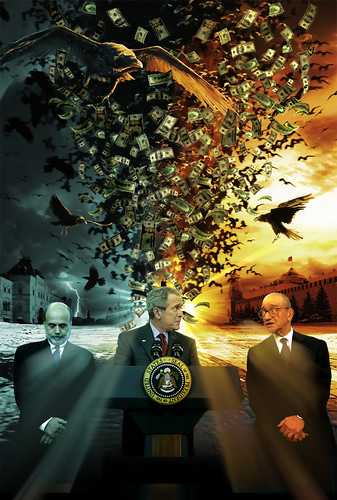
Isn't that what EDUCATION is for?
Article in the LA Times from January 2008, which I had missed.
Excerpt:
Would you rather earn $50,000 a year while other people make $25,000, or would you rather earn $100,000 a year while other people get $250,000? Assume for the moment that prices of goods and services will stay the same.
Surprisingly -- stunningly, in fact -- research shows that the majority of people select the first option; they would rather make twice as much as others even if that meant earning half as much as they could otherwise have. How irrational is that?
This result is one among thousands of experiments in behavioral economics, neuroeconomics and evolutionary economics conclusively demonstrating that we are every bit as irrational when it comes to money as we are in most other aspects of our lives. In this case, relative social ranking trumps absolute financial status. Here's a related thought experiment. Would you rather be A or B?
A is waiting in line at a movie theater. When he gets to the ticket window, he is told that as he is the 100,000th customer of the theater, he has just won $100.
B is waiting in line at a different theater. The man in front of him wins $1,000 for being the 1-millionth customer of the theater. Mr. B wins $150.
Amazingly, most people said that they would prefer to be A. In other words, they would rather forgo $50 in order to alleviate the feeling of regret that comes with not winning the thousand bucks. Essentially, they were willing to pay $50 for regret therapy.
Regret falls under a psychological effect known as loss aversion. Research shows that before we risk an investment, we need to feel assured that the potential gain is twice what the possible loss might be because a loss feels twice as bad as a gain feels good. That's weird and irrational, but it's the way it is.
Human as it sounds, loss aversion appears to be a trait we've inherited genetically because it is found in other primates, such as capuchin monkeys. In a 2006 experiment, these small primates were given 12 tokens that they were allowed to trade with the experimenters for either apple slices or grapes. In a preliminary trial, the monkeys were given the opportunity to trade tokens with one experimenter for a grape and with another experimenter for apple slices. One capuchin monkey in the experiment, for example, traded seven tokens for grapes and five tokens for apple slices. A baseline like this was established for each monkey so that the scientists knew each monkey's preferences.
The experimenters then changed the conditions. In a second trial, the monkeys were given additional tokens to trade for food, only to discover that the price of one of the food items had doubled. According to the law of supply and demand, the monkeys should now purchase more of the relatively cheap food and less of the relatively expensive food, and that is precisely what they did. So far, so rational. But in another trial in which the experimental conditions were manipulated in such a way that the monkeys had a choice of a 50% chance of a bonus or a 50% chance of a loss, the monkeys were twice as averse to the loss as they were motivated by the gain.
But....why not educate people about what it means to be rational? Why take the vice of envy and elevate it to the status of a virtue, and call it a taste for "equality"? Equality is nearly always inequitable. The fact that our stone age minds (and it appears that Hillary Clinton has bigger stones than the rest of us) make us value our own relative position doesn't make it right.
Feel free to double my income, and multiply Angus's by 10, any time. Though I would probably want him to pay for lunch then, I admit.
Excerpt:
Would you rather earn $50,000 a year while other people make $25,000, or would you rather earn $100,000 a year while other people get $250,000? Assume for the moment that prices of goods and services will stay the same.
Surprisingly -- stunningly, in fact -- research shows that the majority of people select the first option; they would rather make twice as much as others even if that meant earning half as much as they could otherwise have. How irrational is that?
This result is one among thousands of experiments in behavioral economics, neuroeconomics and evolutionary economics conclusively demonstrating that we are every bit as irrational when it comes to money as we are in most other aspects of our lives. In this case, relative social ranking trumps absolute financial status. Here's a related thought experiment. Would you rather be A or B?
A is waiting in line at a movie theater. When he gets to the ticket window, he is told that as he is the 100,000th customer of the theater, he has just won $100.
B is waiting in line at a different theater. The man in front of him wins $1,000 for being the 1-millionth customer of the theater. Mr. B wins $150.
Amazingly, most people said that they would prefer to be A. In other words, they would rather forgo $50 in order to alleviate the feeling of regret that comes with not winning the thousand bucks. Essentially, they were willing to pay $50 for regret therapy.
Regret falls under a psychological effect known as loss aversion. Research shows that before we risk an investment, we need to feel assured that the potential gain is twice what the possible loss might be because a loss feels twice as bad as a gain feels good. That's weird and irrational, but it's the way it is.
Human as it sounds, loss aversion appears to be a trait we've inherited genetically because it is found in other primates, such as capuchin monkeys. In a 2006 experiment, these small primates were given 12 tokens that they were allowed to trade with the experimenters for either apple slices or grapes. In a preliminary trial, the monkeys were given the opportunity to trade tokens with one experimenter for a grape and with another experimenter for apple slices. One capuchin monkey in the experiment, for example, traded seven tokens for grapes and five tokens for apple slices. A baseline like this was established for each monkey so that the scientists knew each monkey's preferences.
The experimenters then changed the conditions. In a second trial, the monkeys were given additional tokens to trade for food, only to discover that the price of one of the food items had doubled. According to the law of supply and demand, the monkeys should now purchase more of the relatively cheap food and less of the relatively expensive food, and that is precisely what they did. So far, so rational. But in another trial in which the experimental conditions were manipulated in such a way that the monkeys had a choice of a 50% chance of a bonus or a 50% chance of a loss, the monkeys were twice as averse to the loss as they were motivated by the gain.
But....why not educate people about what it means to be rational? Why take the vice of envy and elevate it to the status of a virtue, and call it a taste for "equality"? Equality is nearly always inequitable. The fact that our stone age minds (and it appears that Hillary Clinton has bigger stones than the rest of us) make us value our own relative position doesn't make it right.
Feel free to double my income, and multiply Angus's by 10, any time. Though I would probably want him to pay for lunch then, I admit.
Monday, April 28, 2008
What Would Angus Do?
Went over to UNC-Chapel Hill today, for a dissertation defense.
Went by the "Java City" in the main dining hall.
Asked for a large coffee.
Elderly lady behind counter says, patiently but with a hint of anger:
"We don't have large, sir. We have three sizes: extra small, small, and medium. Now, which size do you want?"
What would Angus do?
(No, I am not making this up).
Went by the "Java City" in the main dining hall.
Asked for a large coffee.
Elderly lady behind counter says, patiently but with a hint of anger:
"We don't have large, sir. We have three sizes: extra small, small, and medium. Now, which size do you want?"
What would Angus do?
(No, I am not making this up).
Presidential Timber, Presidential Temper: McCain
"When I was in high school, I landed a summer internship with Arizona Senator Dennis DeConcini. (One of my Hebrew School teachers was his office manager. It really is all about who you know.) A big perk for the interns was getting to have lunch with famous Arizonans - including John McCain. It was 1990 and one of the big issues on the Hill that summer was a proposed constitutional amendment to outlaw burning the American flag. McCain was a staunch supporter of the proposed amendment and so, during the lunch, I asked him why he supported it. I guess McCain figured I didn't support the amendment (I didn't), because his jaw clenched, his face turned red, and he launched into a tirade. This all happened 16 years ago, so my memory is a bit fuzzy on the specifics of what he said, but the gist of it was that he had served his country, I hadn't, and therefore I could never understand what the flag meant and I had no right to question him about it. I think I tried to interject something about how I was just 16 and therefore not yet eligible to serve in the military, but there was no stopping McCain, and he continued to browbeat me for my lack of service and patriotism." [Zengerle, TNR]
If you were a REAL patriot, son, you would have lied about your age. Service to das Vaterland is really the only metric of worth. Ask not why John McCain doesn't believe in free speech, ask what YOU can do for your country.
(Nod to KL)
If you were a REAL patriot, son, you would have lied about your age. Service to das Vaterland is really the only metric of worth. Ask not why John McCain doesn't believe in free speech, ask what YOU can do for your country.
(Nod to KL)
Sunday, April 27, 2008
My Op-Ed in Sunday's Herald-Sun
DURHAM HERALD SUN--OP ED
Sunday, Apr 27, 2008
Mike Munger: Government shouldn't subsidize gasoline
I was doing a live television interview. An earnest young woman had a question: "I'm a student, and I have a lot of bills. I'm finding it harder and harder to buy gas for my car. As governor, what would you do to cut gas prices for students like me?"
This question is common, but still my mind raced: What could she possibly mean? No one, not the president, not even Coach K or ol' Roy, can control gas prices. Further, as a matter of policy, our gas prices are, if anything, too low. The only way people are going to cut back on carbon emissions, and use less oil, is if gas prices rise and we all have real incentives to conserve.
So, I gave my usual answer: "Thanks for the question! I think our real problem isn't gas prices. It's gravity. It's not fair that I can't dunk a basketball, since I'm 6 foot 1. And lots of other North Carolinians are short, and couldn't dunk if they had a trampoline. So, I'm proposing a selective suspension of gravity, with short or non-jumping people getting the biggest boost."
OK, I didn't really say that, but I wish I had. Because the idea of legislating gravity is just as sensible as suspending the laws of supply and demand in fuel markets.
Instead, the caller got my sympathy for her plight, and my hope that she found a way to pay her bills. I also hinted that higher fuel prices would have a positive effect, leading folks to conserve more. Later, commenters on the TV station's Web site suggested I was "insensitive." One writer accused me of having "never had to worry about money yourself."
My responses: First, when I went to college, it's true that I didn't have to worry about high gas prices. I was too poor to own a car.
Second, on a broader level, the young woman was falling into a strange logical trap, believing that some mythical being called "the state" was somehow responsible for her money troubles. Fortunately, this kindly giant also happened to have enough money lying around to help pay her bills.
Our delusion about "the state" was first noted by French economist Frederic Bastiat. "The State is the great fiction through which each of us tries to live at the expense of all of us," he said. In other words, the state taxes each of us for revenue, then gives each of us back more than we paid in.
Of course, it's true that anyone would be better off if the state would give us other peoples' money. In the young woman's mind, the fact that she had less money than she wanted meant that someone should give her more. In the commenters' minds, the fact that I did not credit this premise meant that I was insensitive and removed from the needs of real people.
That's nonsense. The main need of real people right now is to find a way to increase the fuel efficiency of their transportation. High prices reflect increased scarcity. We need to react quickly, not slow things down by forcing prices downward. I'm not a fan of gas taxes, or other excise taxes as a way of coercing behavior the government happens to admire. But I'm also opposed, for the same reasons, to subsidies that keep gas prices artificially low, and enable behavior we abhor.
The U.S. has huge corporate tax giveaways built into our tax codes, in the form of oil depletion allowances and accelerated depreciation on capital stock in drilling and exploration. And thousands of our young men and women are fighting, and dying in a war in a region whose only strategic significance is its hold on our oil supply.
So, to the young lady who called in, and to all the rest of you wanting to know how the state is going to support your addiction to driving inefficient, polluting moving mountains of iron and plastic: Get over it. There is nothing anyone can do. In fact, there is nothing anyone should do.
There is something you can do, though. Trade in your gas guzzler on a more efficient car. Change your driving habits. Ride a bike. Or don't. But then don't ask how other taxpayers can be forced to support your senseless, selfish addiction. There is no constitutional right to spend other peoples' money for your gasoline expenses.
Besides, it wouldn't work anyway. We might as well vote to reduce gravity.
Mike Munger is chair of political science at Duke University. He is the Libertarian Party nominee for governor in the 2008 election.
© 2008 by The Durham Herald Company. All rights reserved.
Sunday, Apr 27, 2008
Mike Munger: Government shouldn't subsidize gasoline
I was doing a live television interview. An earnest young woman had a question: "I'm a student, and I have a lot of bills. I'm finding it harder and harder to buy gas for my car. As governor, what would you do to cut gas prices for students like me?"
This question is common, but still my mind raced: What could she possibly mean? No one, not the president, not even Coach K or ol' Roy, can control gas prices. Further, as a matter of policy, our gas prices are, if anything, too low. The only way people are going to cut back on carbon emissions, and use less oil, is if gas prices rise and we all have real incentives to conserve.
So, I gave my usual answer: "Thanks for the question! I think our real problem isn't gas prices. It's gravity. It's not fair that I can't dunk a basketball, since I'm 6 foot 1. And lots of other North Carolinians are short, and couldn't dunk if they had a trampoline. So, I'm proposing a selective suspension of gravity, with short or non-jumping people getting the biggest boost."
OK, I didn't really say that, but I wish I had. Because the idea of legislating gravity is just as sensible as suspending the laws of supply and demand in fuel markets.
Instead, the caller got my sympathy for her plight, and my hope that she found a way to pay her bills. I also hinted that higher fuel prices would have a positive effect, leading folks to conserve more. Later, commenters on the TV station's Web site suggested I was "insensitive." One writer accused me of having "never had to worry about money yourself."
My responses: First, when I went to college, it's true that I didn't have to worry about high gas prices. I was too poor to own a car.
Second, on a broader level, the young woman was falling into a strange logical trap, believing that some mythical being called "the state" was somehow responsible for her money troubles. Fortunately, this kindly giant also happened to have enough money lying around to help pay her bills.
Our delusion about "the state" was first noted by French economist Frederic Bastiat. "The State is the great fiction through which each of us tries to live at the expense of all of us," he said. In other words, the state taxes each of us for revenue, then gives each of us back more than we paid in.
Of course, it's true that anyone would be better off if the state would give us other peoples' money. In the young woman's mind, the fact that she had less money than she wanted meant that someone should give her more. In the commenters' minds, the fact that I did not credit this premise meant that I was insensitive and removed from the needs of real people.
That's nonsense. The main need of real people right now is to find a way to increase the fuel efficiency of their transportation. High prices reflect increased scarcity. We need to react quickly, not slow things down by forcing prices downward. I'm not a fan of gas taxes, or other excise taxes as a way of coercing behavior the government happens to admire. But I'm also opposed, for the same reasons, to subsidies that keep gas prices artificially low, and enable behavior we abhor.
The U.S. has huge corporate tax giveaways built into our tax codes, in the form of oil depletion allowances and accelerated depreciation on capital stock in drilling and exploration. And thousands of our young men and women are fighting, and dying in a war in a region whose only strategic significance is its hold on our oil supply.
So, to the young lady who called in, and to all the rest of you wanting to know how the state is going to support your addiction to driving inefficient, polluting moving mountains of iron and plastic: Get over it. There is nothing anyone can do. In fact, there is nothing anyone should do.
There is something you can do, though. Trade in your gas guzzler on a more efficient car. Change your driving habits. Ride a bike. Or don't. But then don't ask how other taxpayers can be forced to support your senseless, selfish addiction. There is no constitutional right to spend other peoples' money for your gasoline expenses.
Besides, it wouldn't work anyway. We might as well vote to reduce gravity.
Mike Munger is chair of political science at Duke University. He is the Libertarian Party nominee for governor in the 2008 election.
© 2008 by The Durham Herald Company. All rights reserved.
A swing and a miss?
As you know, I love an internet beatdown as much or more than the next guy. However, Rodrik's attempt to put the Turkish hammer on Tyler Cowen's NYT piece is kind of a semi-whiff. Here's Dani:
The "free trade reduces prices" fallacy, yet again. This time the culprit is Tyler Cowen. In his column for the New York Times today, Cowen argues that freer trade in food commodities such as rice would boost global supplies and help reduce prices. He is probably right about the first, but not about the second. The effect of freer trade on domestic food prices depends on whether a country is a food importer or exporter. Freer trade would reduce prices of food (relative to other prices) only in countries that are food importers. Food exporters would experience a rise in the relative price of food, and there is simply no way of escaping that reality. The economics of what Rodrik is saying are indisputable: if we go from no trade to free trade, the exported good's relative price will rise in the exporting country and fall in the importing country.
However, it's not at all clear to me that Tyler ever says free trade lowers prices for everyone. The closest he comes is in the first paragraph:
Rising food prices mean hunger for millions and also political unrest, as has already been seen in Haiti, Egypt and Ivory Coast. Yes, more expensive energy and bad weather are partly at fault, but the real question is why adjustment hasn’t been easier. A big problem is that the world doesn’t have enough trade in foodstuffs.
So, maybe you could interpret that as being wrong. However, it surely does not say "trade lowers the price of the traded good for everyone", which is the error Rodrik claims he is making.
For me, it's too vague to make any claim about what economic theory or fallacy is underlying the paragraph. As it is the opening of an op ed, I suspect its main intent is to get our attention.
The article is actually about how the lack of free markets, market friendly government policies, and supporting infrastructure in a lot of developing countries can be extremely counterproductive in an ever more interconnected world, using rice as an example.
An increasing percentage of the world’s production, including that for agriculture, comes from poor countries. Over all, that’s good for rich countries, which can focus on creating other goods and services, and for the poor countries, which are producing more wealth. But it can slow the speed of adjustment to changing global conditions.
If you live in a country with "corruption, non-existent roads, insecure property rights and price controls" free trade is not going to help you. Leaving will help you. The best thing the rich countries could do for a Haitian or Egyptian would be to let them come and work in the rich world.
The "free trade reduces prices" fallacy, yet again. This time the culprit is Tyler Cowen. In his column for the New York Times today, Cowen argues that freer trade in food commodities such as rice would boost global supplies and help reduce prices. He is probably right about the first, but not about the second. The effect of freer trade on domestic food prices depends on whether a country is a food importer or exporter. Freer trade would reduce prices of food (relative to other prices) only in countries that are food importers. Food exporters would experience a rise in the relative price of food, and there is simply no way of escaping that reality. The economics of what Rodrik is saying are indisputable: if we go from no trade to free trade, the exported good's relative price will rise in the exporting country and fall in the importing country.
However, it's not at all clear to me that Tyler ever says free trade lowers prices for everyone. The closest he comes is in the first paragraph:
Rising food prices mean hunger for millions and also political unrest, as has already been seen in Haiti, Egypt and Ivory Coast. Yes, more expensive energy and bad weather are partly at fault, but the real question is why adjustment hasn’t been easier. A big problem is that the world doesn’t have enough trade in foodstuffs.
So, maybe you could interpret that as being wrong. However, it surely does not say "trade lowers the price of the traded good for everyone", which is the error Rodrik claims he is making.
For me, it's too vague to make any claim about what economic theory or fallacy is underlying the paragraph. As it is the opening of an op ed, I suspect its main intent is to get our attention.
The article is actually about how the lack of free markets, market friendly government policies, and supporting infrastructure in a lot of developing countries can be extremely counterproductive in an ever more interconnected world, using rice as an example.
An increasing percentage of the world’s production, including that for agriculture, comes from poor countries. Over all, that’s good for rich countries, which can focus on creating other goods and services, and for the poor countries, which are producing more wealth. But it can slow the speed of adjustment to changing global conditions.
For example, if demand for rice rises, Vietnamese farmers — who remain shackled by many longstanding regulations of communism — aren’t always able to respond quickly. They don’t even have complete freedom to ship and trade rice within their own country.
Poorer countries also tend to be the most protectionist. To make matters worse, about half of the global rice trade is run by politicized state trading boards.
The reality is that many of today’s commodity shortages, including that for oil, occur because ever more production and trade take place in relatively inefficient and inflexible countries. We’re accustomed to the response times of Silicon Valley, but when it comes to commodities production, many of the relevant institutions abroad have only one foot in the modern age. In other words, the world’s commodities table is very far from flat.
Many poor countries, including some in Africa, could be growing much more rice than they do now. The major culprits include corruption in the rice supply chain, poorly conceived irrigation systems, terrible or even nonexistent roads, insecure property rights, ill-considered land reforms, and price controls on rice.
The ability of a country to grow rice depends not just on its weather, but also on its institutions. Burma, now Myanmar, was once the world’s leading rice exporter, but it is now an economic basket case and many of its people go hungry.
My own criticism of Tyler's piece would rely less on Heckscher-Ohlin and more on Pritchett: In terms of helping the world's poor, freer trade is a drop in the bucket compared to allowing increased labor mobility.If you live in a country with "corruption, non-existent roads, insecure property rights and price controls" free trade is not going to help you. Leaving will help you. The best thing the rich countries could do for a Haitian or Egyptian would be to let them come and work in the rich world.
David is my homeboy
David Stern that is:
Referring to the various and sundry sour-grapey motions and lawsuits flying out of Seattle regarding the Sonics he said on Friday:
“I think, ultimately, despite the novel and face-saving attempts to construct cause of action, that the Sonics are moving to Oklahoma.”
Sweet!
Referring to the various and sundry sour-grapey motions and lawsuits flying out of Seattle regarding the Sonics he said on Friday:
“I think, ultimately, despite the novel and face-saving attempts to construct cause of action, that the Sonics are moving to Oklahoma.”
Sweet!
Saturday, April 26, 2008
Pompous Guy With Big Hair
Pompous Guy, with Big Hair, in LOVE with himself.
Yes, that describes me, I admit, but it happens to be
about this guy. Pretty funny videos.
Yes, that describes me, I admit, but it happens to be
about this guy. Pretty funny videos.
A Conversation, and an Afterword
The Conversation:
My wife: "Well, what are you going to do about it?"
Me: (Warily, because I she may already have told me what the hell this is about, and I forgot) "About....what?"
Wife: "Your son has a PLAYBOY in his car. I was looking for his tennis clothes, and I found it. What are YOU going to do about it?"
Me: (My son? She was there, too; I remember specifically). "What do you mean, what am I going to do?
Wife: "How are we going to punish him?"
Me: "Well, why would we punish him? As long as he lets me see it when he is done."
Wife: (Whack! Whack! Whack! on my shoulder)
Me: "Ow! OW! Dear, he's 18. He can buy a Playboy."
The Afterward:
Later, after I have iced my shoulder, and Donna has calmed down, she gets around to the rest of the story. Turns out the Playboy is the October 1969 issue. Excellent condition. All the car ads and other things inside are beautiful color, like a time capsule.
The centerfold is a demurely posed (for our standards of 2008), extremely fit young black woman. (I only looked for purposes of research, dear. Don't hit my shoulder again). Her name is Jean Bell; she later was quite a few episodes of the Beverly Hillbillies.
Which led me to ask: Was that uncommon? A black Playmate, I mean. Turns out that the first black Playmate had been quite recent, March 1965 (Jennifer Jackson). And I had not known that.
An interesting video, on Jennifer Jackson.
My wife: "Well, what are you going to do about it?"
Me: (Warily, because I she may already have told me what the hell this is about, and I forgot) "About....what?"
Wife: "Your son has a PLAYBOY in his car. I was looking for his tennis clothes, and I found it. What are YOU going to do about it?"
Me: (My son? She was there, too; I remember specifically). "What do you mean, what am I going to do?
Wife: "How are we going to punish him?"
Me: "Well, why would we punish him? As long as he lets me see it when he is done."
Wife: (Whack! Whack! Whack! on my shoulder)
Me: "Ow! OW! Dear, he's 18. He can buy a Playboy."
The Afterward:
Later, after I have iced my shoulder, and Donna has calmed down, she gets around to the rest of the story. Turns out the Playboy is the October 1969 issue. Excellent condition. All the car ads and other things inside are beautiful color, like a time capsule.
The centerfold is a demurely posed (for our standards of 2008), extremely fit young black woman. (I only looked for purposes of research, dear. Don't hit my shoulder again). Her name is Jean Bell; she later was quite a few episodes of the Beverly Hillbillies.
Which led me to ask: Was that uncommon? A black Playmate, I mean. Turns out that the first black Playmate had been quite recent, March 1965 (Jennifer Jackson). And I had not known that.
An interesting video, on Jennifer Jackson.
Late People are Morons
just, JUST as I suspected.
On time people are smarter.
"People who score high on intelligence tests are also good at keeping time,
new Swedish research shows. The team that carried out the study also suspect
that accuracy in timing is important to the brain processes responsible for
problem solving and reasoning...They also demonstrated a correlation between
high intelligence, a good ability to keep time, and a high volume of white
matter in the parts of the brain's frontal lobes involved in problem
solving, planning and managing time." [Karolinska Institutet]
Reminds me of my little article. Be smart. Be on time.
(Nod to KL)
On time people are smarter.
"People who score high on intelligence tests are also good at keeping time,
new Swedish research shows. The team that carried out the study also suspect
that accuracy in timing is important to the brain processes responsible for
problem solving and reasoning...They also demonstrated a correlation between
high intelligence, a good ability to keep time, and a high volume of white
matter in the parts of the brain's frontal lobes involved in problem
solving, planning and managing time." [Karolinska Institutet]
Reminds me of my little article. Be smart. Be on time.
(Nod to KL)
An email from an NC Repub
I was forwarded this email from a long time North Carolina Republican.
She gave me permission to post it.
I have been a Republican all of my 56 years. I have lived in Cary NC for the past 24 years.
I am DEEPLY offended by this insulting ad against Moore and Perdue that uses Rev. Wright. I just heard Linda Daves defend its use on MSNBC and to say she was laughable is an understatement. She said it was a commentary on their judgement to back Obama.
I will tell you it only shows me what Ms. Daves' judgement is and what I fear the NC GOP's judgement is. If that ad is the way the Republican party expects to earn my vote for governor, you are sadly mistaken. I would rather vote for the Democrat than the Republican if that ad continues to run. I am humiliated that my party would find this ad effective much less in good taste.
I have been very proud of the growth and progress I've witnessed in NC and also proud of it's growing reputation throughout the country in so many areas.
Today when I saw that ad I was ashamed of the NC GOP. Ashamed that you can not find a better way to uplift people and make them want to vote for the Republican, rather than target the baser instincts of some people. I thought the NC GOP was better than that. Your request on the website to try to keep that ad on the air is repugnant.
Here is the ad:
My own view: these ads get run because they work. This one may be too extreme. But it also may not.
The Durham Herald ran my view on this, a few days ago, after the PA primary....
The Herald-Sun (Durham, North Carolina)
Distributed by McClatchy-Tribune Business News
April 23, 2008 Wednesday
STATE AND REGIONAL NEWS
230 words
BRIEF: Duke professor: McCain the real winner
Ray Gronberg, The Herald-Sun, Durham, N.C.
Apr. 23--DURHAM -- Hillary Clinton's Pennsylvania primary win further scrambles a Democratic Party nominating process that's helping presumptive Republican nominee John McCain more than anyone else, a Duke University political scientist says.
While attention now turns to the May 6 primaries in North Carolina and Indiana, leading Democrats have reason to worry that Clinton's fight with fellow Barack Obama is going on too long, Duke professor Michael Munger said.
Their problem is that negative campaigning on both sides is driving down their vote-getting potential in November's general election.
"Clinton is saying bad things about Obama and Obama is saying bad things about Clinton, and the voters are going to believe both of them," Munger said. "Unless they find some way to stop this dance of death, we might as well get used to saying 'President McCain.' "
Recent polls in this state show Obama with a lead over Clinton that ranges anywhere from 9 to 25 points.
But I think the NC ad is a mistake tactically, and an offense to decency.
She gave me permission to post it.
I have been a Republican all of my 56 years. I have lived in Cary NC for the past 24 years.
I am DEEPLY offended by this insulting ad against Moore and Perdue that uses Rev. Wright. I just heard Linda Daves defend its use on MSNBC and to say she was laughable is an understatement. She said it was a commentary on their judgement to back Obama.
I will tell you it only shows me what Ms. Daves' judgement is and what I fear the NC GOP's judgement is. If that ad is the way the Republican party expects to earn my vote for governor, you are sadly mistaken. I would rather vote for the Democrat than the Republican if that ad continues to run. I am humiliated that my party would find this ad effective much less in good taste.
I have been very proud of the growth and progress I've witnessed in NC and also proud of it's growing reputation throughout the country in so many areas.
Today when I saw that ad I was ashamed of the NC GOP. Ashamed that you can not find a better way to uplift people and make them want to vote for the Republican, rather than target the baser instincts of some people. I thought the NC GOP was better than that. Your request on the website to try to keep that ad on the air is repugnant.
Here is the ad:
My own view: these ads get run because they work. This one may be too extreme. But it also may not.
The Durham Herald ran my view on this, a few days ago, after the PA primary....
The Herald-Sun (Durham, North Carolina)
Distributed by McClatchy-Tribune Business News
April 23, 2008 Wednesday
STATE AND REGIONAL NEWS
230 words
BRIEF: Duke professor: McCain the real winner
Ray Gronberg, The Herald-Sun, Durham, N.C.
Apr. 23--DURHAM -- Hillary Clinton's Pennsylvania primary win further scrambles a Democratic Party nominating process that's helping presumptive Republican nominee John McCain more than anyone else, a Duke University political scientist says.
While attention now turns to the May 6 primaries in North Carolina and Indiana, leading Democrats have reason to worry that Clinton's fight with fellow Barack Obama is going on too long, Duke professor Michael Munger said.
Their problem is that negative campaigning on both sides is driving down their vote-getting potential in November's general election.
"Clinton is saying bad things about Obama and Obama is saying bad things about Clinton, and the voters are going to believe both of them," Munger said. "Unless they find some way to stop this dance of death, we might as well get used to saying 'President McCain.' "
Recent polls in this state show Obama with a lead over Clinton that ranges anywhere from 9 to 25 points.
But I think the NC ad is a mistake tactically, and an offense to decency.

Friday, April 25, 2008
Why Do Men Die First?
My wife sent me this.
Which means, I think, I can post it without getting killed.
Why do men die first?
This is a question that has gone unanswered for centuries, but, now we know...
If you put a woman on a pedestal and try to protect her from the rat race... you're a male chauvinist.
If you stay home and do the housework .. you're a pansy.
If you work too hard... there's never any time for her.
If you don't work enough... you're a good-for-nothing bum.
If she has a boring repetitive job with low pay... this is exploitation.
If you have a boring repetitive job with low pay... you should get off your lazy behind and find something better.
If you get a promotion ahead of her... that is favoritism.
If she gets a job ahead of you... it's equal opportunity.
If you mention how nice she look s... it's sexual harassment.
If you keep quiet... it's male indifference.
If you cry ... you're a wimp.
If you don't... you're insensitive.
If you appreciate the female form and frilly underwear...you're a pervert.
If you don't... you're gay.
If you like a woman to shave her legs and keep in shape...you're sexist.
If you don't ... you're unromantic.
If you try to keep yourself in shape... you're vain.
If you don't... you're a slob.
If she has a headache... she's tired.
If you have a headache... you don't love her anymore. Or, worse, you need Viagra.
If you want it too often... you're oversexed.
If you don't... there must be someone else.
Bottom Line... Men die first because they want to.
Which means, I think, I can post it without getting killed.
Why do men die first?
This is a question that has gone unanswered for centuries, but, now we know...
If you put a woman on a pedestal and try to protect her from the rat race... you're a male chauvinist.
If you stay home and do the housework .. you're a pansy.
If you work too hard... there's never any time for her.
If you don't work enough... you're a good-for-nothing bum.
If she has a boring repetitive job with low pay... this is exploitation.
If you have a boring repetitive job with low pay... you should get off your lazy behind and find something better.
If you get a promotion ahead of her... that is favoritism.
If she gets a job ahead of you... it's equal opportunity.
If you mention how nice she look s... it's sexual harassment.
If you keep quiet... it's male indifference.
If you cry ... you're a wimp.
If you don't... you're insensitive.
If you appreciate the female form and frilly underwear...you're a pervert.
If you don't... you're gay.
If you like a woman to shave her legs and keep in shape...you're sexist.
If you don't ... you're unromantic.
If you try to keep yourself in shape... you're vain.
If you don't... you're a slob.
If she has a headache... she's tired.
If you have a headache... you don't love her anymore. Or, worse, you need Viagra.
If you want it too often... you're oversexed.
If you don't... there must be someone else.
Bottom Line... Men die first because they want to.
It's a RULE!
My son Kevin (18) is going to be a t-ball ump this summer.
Not an ump, actually, a "field manager."
The field manager confers with the two coaches to determine,
unanimously, if an out has been recorded.
The rules...the rules are pretty good. My favorite:
Rule 5.1: No one can keep score. In fact, no score can be kept by
either team or by fans; everyone is a winner!
Nice that one doesn't need to win to be a winner, but that just having a rule makes you one.
Not an ump, actually, a "field manager."
The field manager confers with the two coaches to determine,
unanimously, if an out has been recorded.
The rules...the rules are pretty good. My favorite:
Rule 5.1: No one can keep score. In fact, no score can be kept by
either team or by fans; everyone is a winner!
Nice that one doesn't need to win to be a winner, but that just having a rule makes you one.
Note to Self: Have Scheduler Check....
Note to self: have scheduler check on events, to see if they are appropriate, for arranging to have me speak there.
Because, for example, speaking at a "Birthday Party for Hitler" would be unfortunate.
The guy's excuse? He was just following orders. That didn't fly at Nuremberg, either.
(Nod to the Bearded Hammer of Warmoak)
Because, for example, speaking at a "Birthday Party for Hitler" would be unfortunate.
The guy's excuse? He was just following orders. That didn't fly at Nuremberg, either.
(Nod to the Bearded Hammer of Warmoak)
Internet beatdowns
1. Some French dude absolutely buries Jimmy Carter: Is it the vanity of someone who is no longer so important, who wants a last 15 minutes in the spotlight before he has to leave the stage forever? Is it the senility of a politician who has lost touch with reality and with his own party?
2. Jim Shultz crushes the World Bank's attempt to de-villianize itself in Bolivia: There is, however, a good reason that Bolivians aren't used to hearing some of the Bank's ten boasts – it's because they aren't true. In fact, a few of the Bank's claims wander so far into fiction that one wonders whether the Bolivia office has hired Pinocchio and Associates Inc. as its new public relations firm.
3. Greg Weeks criticizes CATO's bizzare decision to give $500,000 to Venezuelan student activist Yon Goicoechea: Think tanks are certainly free to give their money to whomever they wish, but my immediate reaction was that this prize could permanently derail his political career and end up having the opposite effect the Cato Institute and others who hate Chávez want.
2. Jim Shultz crushes the World Bank's attempt to de-villianize itself in Bolivia: There is, however, a good reason that Bolivians aren't used to hearing some of the Bank's ten boasts – it's because they aren't true. In fact, a few of the Bank's claims wander so far into fiction that one wonders whether the Bolivia office has hired Pinocchio and Associates Inc. as its new public relations firm.
3. Greg Weeks criticizes CATO's bizzare decision to give $500,000 to Venezuelan student activist Yon Goicoechea: Think tanks are certainly free to give their money to whomever they wish, but my immediate reaction was that this prize could permanently derail his political career and end up having the opposite effect the Cato Institute and others who hate Chávez want.
Remember to love in the wild and fight in the gym
If you can get past the Spinal Tap looking backing band, I highly recommend these two videos of Bill Callahan, live and acoustic on a NYC rooftop. The first is a Smog song "cold blooded old times" and the second is one of my favorite Callahan songs, "sycamore" (the title of this post is from this song).
Snipe Hunt!
"Newly acquired wealth does not endow one with immediate wisdom, nor does it make one immune to a good hustle," ..."I am an idealistic, naive, passionate, truth-seeking, spiritually motivated artist, unschooled in the science of law and finance."
Thus spake Wesley Snipes in an effort to explain how he came to be 20 million in arrears to Unca Sam after not filing tax returns from 1999-2004.
Wesley's attorneys appear to be from Mars: "We were hoping for a complete acquittal," Snipes attorney Linda Moreno told reporters. "I have faith in the process, and I have faith in the jury system. We will appeal."
Looks like he's going to have a big legal bill to go with his big tax bill.
In all seriousness, though, doesn't 3 years in prison seem a little nuts here? Can't you auction off all his assets, put a lien on his future earnings and send him out to hustle up the dough? Prison seems unwarranted. Maybe the Feds are abusing Wes to send a message??
"Snipes' long prison sentence should send a loud and crystal clear message to all tax defiers that if they engage in similar tax defier conduct, they face joining him and his co-defendants ... as inmates in prison," said Nathan Hochman, an official at the US Department of Justice Tax Division.
Ya, maybe so.
Thus spake Wesley Snipes in an effort to explain how he came to be 20 million in arrears to Unca Sam after not filing tax returns from 1999-2004.
Wesley's attorneys appear to be from Mars: "We were hoping for a complete acquittal," Snipes attorney Linda Moreno told reporters. "I have faith in the process, and I have faith in the jury system. We will appeal."
Looks like he's going to have a big legal bill to go with his big tax bill.
In all seriousness, though, doesn't 3 years in prison seem a little nuts here? Can't you auction off all his assets, put a lien on his future earnings and send him out to hustle up the dough? Prison seems unwarranted. Maybe the Feds are abusing Wes to send a message??
"Snipes' long prison sentence should send a loud and crystal clear message to all tax defiers that if they engage in similar tax defier conduct, they face joining him and his co-defendants ... as inmates in prison," said Nathan Hochman, an official at the US Department of Justice Tax Division.
Ya, maybe so.
How long can this go on?
We are closing in on 4 weeks since the Zimbabwean presidential elections, with no results yet announced. The parliamentary elections didn't go Mugabe's way and they are currently being "recounted". The MDC candidate who in all likelihood won the presidential election is in Ghana, afraid to stay in Zim. And now there's this:
Armed riot police raided the headquarters of Zimbabwe's main opposition party on Friday and detained scores of people in the biggest crackdown on the MDC since disputed elections last month, officials said. Dozens of riot police detained around 100 MDC supporters who were taken away in a crowded police bus, a Reuters witness said. The MDC said 200 to 250 police took part in the raid and they also took away computers used by the election command centre.
At this point, it looks like Mugabe staying in power seems like the most likely outcome of this mess. Father time (Bobby M is 84), seems like the only savior of the Zimbabwean people.
Armed riot police raided the headquarters of Zimbabwe's main opposition party on Friday and detained scores of people in the biggest crackdown on the MDC since disputed elections last month, officials said. Dozens of riot police detained around 100 MDC supporters who were taken away in a crowded police bus, a Reuters witness said. The MDC said 200 to 250 police took part in the raid and they also took away computers used by the election command centre.
At this point, it looks like Mugabe staying in power seems like the most likely outcome of this mess. Father time (Bobby M is 84), seems like the only savior of the Zimbabwean people.
Thursday, April 24, 2008
Good Stuff
1. Hey Brazil! Wanna be our personal gas station? Brazil's discoveries of what may be two of the world's three biggest oil finds in the past 30 years could help end the Western Hemisphere's reliance on Middle East crude.
2. Our trade pact with Colombia, Nic Kristof gets it! Some Democrats point out that Colombia’s government has been tied to paramilitary units that kill union members. It was important for Democrats to raise these concerns — forcing the Colombian government to crack down on paramilitaries and prosecute those who murder unionists. But Colombia’s progress has been immense. Assassinations of union members, while still a problem, have fallen 80 percent since 2002. Last year, the murder rate for union members was 4 per 100,000, reaching levels far below the homicide rate for the general public. As she clips flowers in a vast greenhouse, Ms. Reynosa knows that her future depends on access to the American market. She agrees that Colombia has human-rights problems, but she argues passionately that the free-trade agreement is the way to register continued improvements. More trade will mean more jobs and more security and human rights, she argues.
3. Roger Simon lays out Hillary's path to the nomination. A random excerpt: And then, of course, bribe the superdelegates.
2. Our trade pact with Colombia, Nic Kristof gets it! Some Democrats point out that Colombia’s government has been tied to paramilitary units that kill union members. It was important for Democrats to raise these concerns — forcing the Colombian government to crack down on paramilitaries and prosecute those who murder unionists. But Colombia’s progress has been immense. Assassinations of union members, while still a problem, have fallen 80 percent since 2002. Last year, the murder rate for union members was 4 per 100,000, reaching levels far below the homicide rate for the general public. As she clips flowers in a vast greenhouse, Ms. Reynosa knows that her future depends on access to the American market. She agrees that Colombia has human-rights problems, but she argues passionately that the free-trade agreement is the way to register continued improvements. More trade will mean more jobs and more security and human rights, she argues.
3. Roger Simon lays out Hillary's path to the nomination. A random excerpt: And then, of course, bribe the superdelegates.
Culturing Violence
New NBER working paper by Miguel, Saiegh, & Satyanath entitled "National Cultures and Soccer Violence" (ungated version available here).
Abstract:
Can some acts of violence be explained by a society’s “culture”? Scholars have found it hard to empirically disentangle the effects of culture, legal institutions, and poverty in driving violence. We address this problem by exploiting a natural experiment offered by the presence of thousands of international soccer (football) players in the European professional leagues. We find a strong relationship between the history of civil conflict in a player’s home country and his propensity to behave violently on the soccer field, as measured by yellow and red cards. This link is robust to region fixed effects, country characteristics (e.g., rule of law, per capita income), player characteristics (e.g., age, field position, quality), outliers, and team fixed effects. Reinforcing our claim that we isolate cultures of violence rather than simple rule-breaking or something else entirely, there is no meaningful correlation between a player’s home country civil war history and soccer performance measures not closely related to violent conduct.
Abstract:
Can some acts of violence be explained by a society’s “culture”? Scholars have found it hard to empirically disentangle the effects of culture, legal institutions, and poverty in driving violence. We address this problem by exploiting a natural experiment offered by the presence of thousands of international soccer (football) players in the European professional leagues. We find a strong relationship between the history of civil conflict in a player’s home country and his propensity to behave violently on the soccer field, as measured by yellow and red cards. This link is robust to region fixed effects, country characteristics (e.g., rule of law, per capita income), player characteristics (e.g., age, field position, quality), outliers, and team fixed effects. Reinforcing our claim that we isolate cultures of violence rather than simple rule-breaking or something else entirely, there is no meaningful correlation between a player’s home country civil war history and soccer performance measures not closely related to violent conduct.
Kudos to Mozambique, Angola and yes, South Africa (but not really)
 I've been critical of South Africa, especially its president Mbeki, about their tacit support for Bobby Mugabe. Yet they reversed course and turned away the Chinese arms shipment and other southern african countries followed suite. The ship is headed back to China fully loaded.
While this is good, it's far from sufficient to stem the fraud and violence still being perpetrated in Zimbabwe by Mugabe and his people.
Incredibly, South Africa is now pushing a "unity government" where Mugabe and the M.D.C would somehow "share" power. This in an election where the votes have never even been reported? Where the incumbent presided over epic inflation, unemployment and out-migration?
Here's Jacob Zuma, head of South Africa's ruling ANC party:
Asked about a national unity government in Zimbabwe, Mr. Zuma said, “I don’t think it is premature because you are dealing with a situation where we are almost three weeks after the election and there has been no announcement of the results.”
Regional diplomacy had not resolved the crisis, he said, “so we have to say ‘what do we do?’ ”
“The natural thing is that there should be discussions,” he said. The call for a unity government “is not premature, it is actually appropriate at this time,” he said.
Wednesday, April 23, 2008
The other side of the story
For all of Tyler's complaints about America, at least we don't have crap like this to worry about!!
Brad Henry to his constituents: Go pound sand!
Superdelegate and OK Governor Brad Henry pledged his troth to Barack Obama today. Here are the results of the Oklahoma Democratic primary: Edwards 10%, Obama 31%, Clinton 55%.
Hmmmmmmmmm. Don't blame me, I voted for Zombie Joseph Beuys!
Hmmmmmmmmm. Don't blame me, I voted for Zombie Joseph Beuys!
Things must be bad in Argentina 'cause Fernandez is playing the "Malvinas" card!
Really! The world is so nuts these days that I feel like I have to keep saying, "I am not making this up". President Cristina Fernandez is talking tough about the Falkland Islands, 26 years after Argentina's last attempt which failed miserably and helped to bring down the "government" (military junta) that initiated it.
If it came down to it, do you think Gordon Brown would have the onions to do what Thatcher did the last time?
"The sovereign claim to the Malvinas Islands is inalienable," she said in a speech marking the 26th anniversary of Argentina's ill-fated invasion of the islands, located 480 kilometers (300 miles) off shore.
The April 2, 1982 invasion prompted then British prime minister Margaret Thatcher to deploy naval forces to retake the Falklands, known as the Malvinas in Spanish.
The short, bloody conflict led to Argentina's surrender on June 14, 1982 after the death of 649 Argentines and 255 Britons.
Historians saw the invasion as an attempt by Argentina's ruling military junta, which was then in power, to divert attention away from domestic problems.
In her speech Kirchner called for Argentina to strengthen its representation in international bodies to denounce "this shameful colonial enclave in the 21st century."
And Vice President Julio Cobos said in the southern city of Rio Grande that "we must recover this territory that is ours, that belongs to us."
The comments came as Kirchner faces her own woes, battling against farmers who have barricaded roads in a protest against a stiff tax hike on soybean exports.
The conflict has created shortages of meat and other staples in Buenos Aires and elsewhere,and tested the social fabric, with pro- and anti-government supporters holding dueling rallies.If it came down to it, do you think Gordon Brown would have the onions to do what Thatcher did the last time?
Bus, meet Dad. Dad, meet Bus
Wow. Chelsea worked off some stored up anger by throwing her dear old dad under the bus last night at Duke.
Hill "stands her ground on the issues?" LOL, like the war?? Knows how to work with Republicans? Better than Bill? Every hear of NAFTA, Chelsea??
Shouldn't we expect just a wee bit more perspective from a history major at Stanford?
DURHAM, N.C. - Chelsea Clinton said Tuesday her mother would be a better president than her father because Hillary Rodham Clinton is more prepared and more progressive.Clinton, campaigning for her mother, told about 300 people at Duke University that former President Clinton didn't have a complete grasp of the inner workings of Congress when he took office in 1993.
The former first daughter said her mother will benefit from her time as a New York senator.
Chelsea Clinton said her mother stands her ground on issues but knows how to work with Republicans. And that, she said, will help her mother navigate challenges and fulfill her campaign promises.
"I think that she'll be a better president because she'll be more progressive and she's more prepared," Clinton said. "She'll just hit the ground running from Day One in a way that my father was not as equipped to do."
That is just so awesome in so many ways. It's probably faster and easier to say what parts are actually true. Given that "progressive" means "liberal" Hill would be more "progressive" than Bill. Thats about it though.Hill "stands her ground on the issues?" LOL, like the war?? Knows how to work with Republicans? Better than Bill? Every hear of NAFTA, Chelsea??
Shouldn't we expect just a wee bit more perspective from a history major at Stanford?
Tuesday, April 22, 2008
Walking: Yer doin' it wrong!
At least if you are wearing shoes you are. So says Adam Sternbergh in a fun article from New York Magazine. Here's an informative excerpt:
Still, while I can accept that barefoot-walking is beneficial, it’s hard to shake off 30 years of wrapping my feet in foam. So I put this question—if bare feet are natural, why do we need shoes to “protect” the foot?—to a podiatrist at the Hospital for Special Surgery, who explained, “People who rely on the ‘caveman mentality’ are not taking into consideration that the average life span of a caveman was a heck of a lot shorter than the life span of a person today. The caveman didn’t live past age 30. Epidemiologically speaking, it’s been estimated that, by age 40, about 80 percent of the population has some muscular-skeletal foot or ankle problem. By age 50 to 55, that number can go up to 90 or 95 percent.” Ninety-five percent of us will develop foot or ankle problems? Yeesh. Those are discouraging numbers—but wait. Are we talking about 95 percent of the world population, or of North America? “Those are American figures,” he says. Which makes me think, North Americans have the most advanced shoes in the world, yet 90 percent of us still develop problems? We’ve long assumed this means we need better shoes. Maybe it means we don’t need shoes at all.
OMG!! It's the "the solution to government caused problems is more government argument " applied to footware. Well done Mr. Podiatrist and well questioned Mr. Sternbergh!
Still, while I can accept that barefoot-walking is beneficial, it’s hard to shake off 30 years of wrapping my feet in foam. So I put this question—if bare feet are natural, why do we need shoes to “protect” the foot?—to a podiatrist at the Hospital for Special Surgery, who explained, “People who rely on the ‘caveman mentality’ are not taking into consideration that the average life span of a caveman was a heck of a lot shorter than the life span of a person today. The caveman didn’t live past age 30. Epidemiologically speaking, it’s been estimated that, by age 40, about 80 percent of the population has some muscular-skeletal foot or ankle problem. By age 50 to 55, that number can go up to 90 or 95 percent.” Ninety-five percent of us will develop foot or ankle problems? Yeesh. Those are discouraging numbers—but wait. Are we talking about 95 percent of the world population, or of North America? “Those are American figures,” he says. Which makes me think, North Americans have the most advanced shoes in the world, yet 90 percent of us still develop problems? We’ve long assumed this means we need better shoes. Maybe it means we don’t need shoes at all.
OMG!! It's the "the solution to government caused problems is more government argument " applied to footware. Well done Mr. Podiatrist and well questioned Mr. Sternbergh!
Why are professors such jerks? Megan McArdle breaks it down for us
1) The money is so low relative to the professions they might have gone into. Journalists also suffer from this bitterness. Interestingly, the more lucrative their current options are, the less bitter the professors seem to be--economists and engineers seem relatively cheerful compared to English and History professors.
2) It's so easy to tell exactly where you rank in the academic hierarchy. Well, I don't find it easy, but they all seem to. Unless you're very near the top, your ranking is reinforced every time you attend any sort of professional event. If you are near the top, you promptly switch to wondering why you're paid less than an entry level investment banking analyst.
3) It's so hard to switch jobs. Job mobility is so low that you can't salve your ego by telling yourself that your current job is merely a waystop en route to something better.
4) Academics have few alternative status hierarchies Getting tenure is an all consuming process that leaves very little time for developing other hobbies. And the job virtually definitionally does not attract the kind of people who will be happy putting their career on a back burner to family or lifestyle.
5) Academics have virtually no control over where they live They usually seem to go where the best job is, regardless of whether or not the local area suits them. In many cases, this further focuses them inward on academia, because there aren't all that many other people around who share their interests.
The full post is here.
You'll never say "google" the same way again!
It takes a little while to get going but this is fantastic. Hat tip to Marc Andreessen

Joke Botching
Yesterday, gave a talk over at UNC-Chapel Hill.
This story appeared in the Deadly Tar Ball.
In particular, the story contains this as a final paragraph:
He wrapped up his speech by showing distrust for the presidential candidates.
"If John McCain, Hillary Clinton and Barack Obama were on a bridge and it collapsed, America would be saved."
I responded, in comments, like this:
The last sentence in the story is a summary of a joke, one that misses the point of the joke. What I actually said was this:
*******************************
Suppose Clinton, Obama, and McCain were on a bridge. Now, suppose the bridge collapsed into the water....
Who would be saved?
Answer: The American people.
*********************************
Not a funny joke, but it is in the context of someone asking me who I endorse, among the major candidates. The point is that I don't endorse any of them.
On the other hand, I wish them no harm. I hope that all the bridges they cross stand tall and firm, and don't collapse.
This story appeared in the Deadly Tar Ball.
In particular, the story contains this as a final paragraph:
He wrapped up his speech by showing distrust for the presidential candidates.
"If John McCain, Hillary Clinton and Barack Obama were on a bridge and it collapsed, America would be saved."
I responded, in comments, like this:
The last sentence in the story is a summary of a joke, one that misses the point of the joke. What I actually said was this:
*******************************
Suppose Clinton, Obama, and McCain were on a bridge. Now, suppose the bridge collapsed into the water....
Who would be saved?
Answer: The American people.
*********************************
Not a funny joke, but it is in the context of someone asking me who I endorse, among the major candidates. The point is that I don't endorse any of them.
On the other hand, I wish them no harm. I hope that all the bridges they cross stand tall and firm, and don't collapse.
Monday, April 21, 2008
Engineers' guide to cats
Engineers' guide to cats.
"Tuna is cocaine for kitties."
Cat yodeling.
I like cardboard deconstruction.
(Nod to Alex H)
"Tuna is cocaine for kitties."
Cat yodeling.
I like cardboard deconstruction.
(Nod to Alex H)
Who is More Liberal, Senator Obama or Senator Clinton?
Who is More Liberal, Senator Obama or Senator Clinton?
Answer: Yes.
(Nod to my friend Keith Poole, who is recovering from neck surgery. I think the plan is that, after the surgery, he will actually HAVE a neck. It's called an "addanecktome." I trust it went well!)
(And, seriously for a moment, congrats to Keith for his Duncan Black Prize this year, which was well-deserved for his fine paper, "Changing Minds? Not in Congress!")
Answer: Yes.
(Nod to my friend Keith Poole, who is recovering from neck surgery. I think the plan is that, after the surgery, he will actually HAVE a neck. It's called an "addanecktome." I trust it went well!)
(And, seriously for a moment, congrats to Keith for his Duncan Black Prize this year, which was well-deserved for his fine paper, "Changing Minds? Not in Congress!")
John 11:35?
 JERUSALEM - Dozens of Greek and Armenian priests and worshippers exchanged blows at one of Christianity's holiest shrines on Orthodox Palm Sunday, and used palm fronds to pummel police who tried to break up the brawl. The fight came amid growing rivalry over religious rights at the Church of the Holy Sepulcher, built over the site in Jerusalem where tradition says Jesus was buried and resurrected.
 It erupted when Armenian clergy kicked out a Greek priest from their midst, pushed him to the ground and kicked him, according to witnesses.
When police intervened, some worshippers hit them with the palm fronds they were holding for the religious holiday. The Eastern Orthodox churches, including the Armenians and Greek Orthodox, follow a different calendar from Western Christians and celebrate Easter next Sunday.
Wow. As always, I am not making any of this up.
Can Correa control Ecuador's Military?
Not yet, says an article in the NY Times by Simon Romero.
PhD Economist turned firebrand President Rafael Correa began his term by trying to buy the military's support with:
"salary raises for soldiers; a 25 percent increase in the 2008 military budget, to $920 million; and lucrative highway construction contracts for companies controlled by military officials."
Yes you read that right. As it turns out the Ecuadorian military is old school:
Unlike the armed forces of most other countries in Latin America, Ecuador’s military has retained substantial economic might since a military junta transferred power to a civilian government in the 1970s. Through holding companies, the armed forces still control TAME, one of Ecuador’s largest airlines, and enterprises in the munitions, shrimp fishing, construction, clothing, flower farming and hydroelectric industries, making the military one of the country’s most powerful economic group.
Despite his efforts, the military is still too close to the US and Colombia for Correa's comfort:
PhD Economist turned firebrand President Rafael Correa began his term by trying to buy the military's support with:
"salary raises for soldiers; a 25 percent increase in the 2008 military budget, to $920 million; and lucrative highway construction contracts for companies controlled by military officials."
Yes you read that right. As it turns out the Ecuadorian military is old school:
Unlike the armed forces of most other countries in Latin America, Ecuador’s military has retained substantial economic might since a military junta transferred power to a civilian government in the 1970s. Through holding companies, the armed forces still control TAME, one of Ecuador’s largest airlines, and enterprises in the munitions, shrimp fishing, construction, clothing, flower farming and hydroelectric industries, making the military one of the country’s most powerful economic group.
Despite his efforts, the military is still too close to the US and Colombia for Correa's comfort:
Still, tensions persist over his clash with top generals, which emerged after Colombian forces raided a Colombian rebel camp in Ecuador last month. The raid against the rebel group, the Marxist-inspired Revolutionary Armed Forces of Colombia, put Ecuador and its ally Venezuela on edge with Colombia. Twenty-five people were killed, including Franklin Aisalla, an Ecuadorean operative for the group, known as the FARC.
The face-off between Ecuador and Colombia ended at a summit meeting in the Dominican Republic, but it has begun again over revelations that Ecuadorean intelligence officials had been tracking Mr. Aisalla, information that was shared not with the president, but apparently with Colombian forces and their American military advisers.
The leak became evident when video and photo images surfaced in Colombia and Ecuador showing Mr. Aisalla meeting with FARC commanders.
“I, the president of the republic, found out about these operations by reading the newspaper,” a visibly indignant Mr. Correa said last week during an interview in the capital, Quito, with foreign correspondents. “This is not something we can tolerate. He added that he planned to restructure the intelligence agencies to give him greater direct control over them.
In a rebuke of senior military officials, Mr. Correa named as defense minister his personal secretary, Javier Ponce, who was an outspoken critic of the armed forces in his previous careers as a poet and an editorial writer at some of Ecuador’s largest newspapers.
While I am not Correa's biggest fan, I am with him on this one. Civilian control of the military is a must, (as is, I might add, *not* having the military run large civilian companies). I'd rather see the craziest policies coming out of a democracy than excellent ones coming after a coup from a military junta.
The Few, The Proud, The Political Scientists!
According to Forbes' list of "Well paying rare jobs" political science is oh-tay.
Here is a summary listing the occupation, the alleged number of practitioners and their average salary. The data is "culled from the US Bureau of Labor Statistics data" and you can see them all by clicking on the "in pictures" link from the link above.
Prosthodontists 480 $158,940
Astronomers 1430 $ 95,000
Industrial Psychologists 1140 $ 89,920
Mathematicians 2840 $ 86,780
Political Scientists 3970 $ 86,370
Nuclear Reactor Operators 3750 $ 70,800
Sociologists 3440 $ 68,300
Agricultural Engineers 3050 $ 67,810
Gaming Managers 3330 $ 67,340
Here is Forbes and the BLS on what is a Political Scientist: Most of these professionals work for the federal government and earn more than $100,000 annually. The majority of course work is in Washington, D.C. The BLS says, "May study public opinion, political decision making and ideology, as well as analyze the structure and operation of governments."
Economists don't qualify as "rare" because there are over 15,000 of us according to BLS!
hat tip to BR
Here is a summary listing the occupation, the alleged number of practitioners and their average salary. The data is "culled from the US Bureau of Labor Statistics data" and you can see them all by clicking on the "in pictures" link from the link above.
Prosthodontists 480 $158,940
Astronomers 1430 $ 95,000
Industrial Psychologists 1140 $ 89,920
Mathematicians 2840 $ 86,780
Political Scientists 3970 $ 86,370
Nuclear Reactor Operators 3750 $ 70,800
Sociologists 3440 $ 68,300
Agricultural Engineers 3050 $ 67,810
Gaming Managers 3330 $ 67,340
Here is Forbes and the BLS on what is a Political Scientist: Most of these professionals work for the federal government and earn more than $100,000 annually. The majority of course work is in Washington, D.C. The BLS says, "May study public opinion, political decision making and ideology, as well as analyze the structure and operation of governments."
Economists don't qualify as "rare" because there are over 15,000 of us according to BLS!
hat tip to BR
Sunday, April 20, 2008
Bitter White Guy Performance Art
Two incidents. I was only a witness. But pretty impressive redneckery.
Incident the First:
In the Hardees across the street the "Inn at Virginia Tech," where I stayed when I gave my talk at the B-school. (I stayed at the Inn, not the Hardees). Asian kid, reading THE ECONOMIST. Aryan frat boy looking kid, sitting at same table, reading USA TODAY. It's 6:45 am. White kid: "You damned Asians! You are just exploiting us!"
Asian kid: (Stares, amazed. Me, too).
White kid: "Yeah, it says here that the fall of the U.S. dollar has caused such an increase in exports that there aren't enough containers in the U.S. They are piling up overseas."
Asian kid: (Patiently, and quite sensibly) "Well, but the U.S. still has a huge trade deficit with most countries in manufactured goods. It may be true that imports are up, but the NET trade pattern is still in deficit."
White kid: (Throws USA TODAY at Asian kid) "You just hate America. You people want all those containers gone so you can bankrupt American businesses."
Asian kid: "'You people'? I'm from Richmond."
White kid: "Well, let's go to the car. I'm not going to explain to you what an idiot you are in front of all these people. And I'm sure you don't want to walk."
Incident the Second:
Philadelphia airport, about 7 pm. Two 20-ish kids walk up to the gate, two gates down from mine. I was sitting reading the paper, waiting for my flight.
One kid sees the door is closed. "Open that door! OPEN THAT DOOR!" Yelling loudly, and in quite a threatening way.
30-ish black woman behind the counter, no other airline personnel around. She tells the kid that in order to leave on time, they have to close the door five minutes before departure for checks. Plus, she had announced three times that this was the "final boarding call." (It's true, she had, I heard it).
The kid yells, "I didn't hear you. I was right here! You have to OPEN THAT DOOR RIGHT NOW! OPEN IT. I MEAN IT."
Woman: "Sir, I'll have to call security if you don't back off. I can't open the door, the flight is leaving."
Kid: "I see it! It's right there! It hasn't left. Open the door. I'm TELLING YOU, OPEN THE DOOR!"
The woman told the kid, without getting angry or raising her voice, that there two truths he was going to have to accept. First, the flight was gone and she would have to rebook him. Second, if he didn't stop yelling and threatening her, she was going to call security.
Kid: "I'm just going to stand right here and block the gate. You can't do this to me."
(Stands against the desk, arms around machine for checking boarding passes.)
Woman picks up phone, makes call in low voice.
Three minutes later, three men in uniform show up. One is about Angus's size, and is clearly in charge. One is about 5'10", and extremely solidly built. And the other....I swear he was 6'10", and 375 pounds. He looked like a human mountain, on the move. The two smaller guys get on both sides of the protesting kid, and speak to him in low tones. Kid decides to make a break for it, and turns around and runs his face smack in the giant guy's chest. Kid backs off, holding his forehead and gaping at giant.
For some reason it reminded me of the line in "Princess Bride," where the Billy Crystal character threatens to call the "goon squad." And Andre the Giant says, "I'm on the goon squad." And Crystal says, "GAH! You ARE the goon squad." This guy was a one man goon squad.

Anyway, handcuffs for the loudmouth kid. Now, I have some sympathy for the "I'm here before scheduled departure time" argument. But I also have sympathy with the woman gate agent. She bent over backwards NOT to call security. And then when security came it was justice swift and sure. I can't imagine what the kid thought would happen. That is NOT going to end well.
I think both incidents were some of the people Obama may have been talking about, idiotic bitter white guys.
Incident the First:
In the Hardees across the street the "Inn at Virginia Tech," where I stayed when I gave my talk at the B-school. (I stayed at the Inn, not the Hardees). Asian kid, reading THE ECONOMIST. Aryan frat boy looking kid, sitting at same table, reading USA TODAY. It's 6:45 am. White kid: "You damned Asians! You are just exploiting us!"
Asian kid: (Stares, amazed. Me, too).
White kid: "Yeah, it says here that the fall of the U.S. dollar has caused such an increase in exports that there aren't enough containers in the U.S. They are piling up overseas."
Asian kid: (Patiently, and quite sensibly) "Well, but the U.S. still has a huge trade deficit with most countries in manufactured goods. It may be true that imports are up, but the NET trade pattern is still in deficit."
White kid: (Throws USA TODAY at Asian kid) "You just hate America. You people want all those containers gone so you can bankrupt American businesses."
Asian kid: "'You people'? I'm from Richmond."
White kid: "Well, let's go to the car. I'm not going to explain to you what an idiot you are in front of all these people. And I'm sure you don't want to walk."
Incident the Second:
Philadelphia airport, about 7 pm. Two 20-ish kids walk up to the gate, two gates down from mine. I was sitting reading the paper, waiting for my flight.
One kid sees the door is closed. "Open that door! OPEN THAT DOOR!" Yelling loudly, and in quite a threatening way.
30-ish black woman behind the counter, no other airline personnel around. She tells the kid that in order to leave on time, they have to close the door five minutes before departure for checks. Plus, she had announced three times that this was the "final boarding call." (It's true, she had, I heard it).
The kid yells, "I didn't hear you. I was right here! You have to OPEN THAT DOOR RIGHT NOW! OPEN IT. I MEAN IT."
Woman: "Sir, I'll have to call security if you don't back off. I can't open the door, the flight is leaving."
Kid: "I see it! It's right there! It hasn't left. Open the door. I'm TELLING YOU, OPEN THE DOOR!"
The woman told the kid, without getting angry or raising her voice, that there two truths he was going to have to accept. First, the flight was gone and she would have to rebook him. Second, if he didn't stop yelling and threatening her, she was going to call security.
Kid: "I'm just going to stand right here and block the gate. You can't do this to me."
(Stands against the desk, arms around machine for checking boarding passes.)
Woman picks up phone, makes call in low voice.
Three minutes later, three men in uniform show up. One is about Angus's size, and is clearly in charge. One is about 5'10", and extremely solidly built. And the other....I swear he was 6'10", and 375 pounds. He looked like a human mountain, on the move. The two smaller guys get on both sides of the protesting kid, and speak to him in low tones. Kid decides to make a break for it, and turns around and runs his face smack in the giant guy's chest. Kid backs off, holding his forehead and gaping at giant.
For some reason it reminded me of the line in "Princess Bride," where the Billy Crystal character threatens to call the "goon squad." And Andre the Giant says, "I'm on the goon squad." And Crystal says, "GAH! You ARE the goon squad." This guy was a one man goon squad.
Anyway, handcuffs for the loudmouth kid. Now, I have some sympathy for the "I'm here before scheduled departure time" argument. But I also have sympathy with the woman gate agent. She bent over backwards NOT to call security. And then when security came it was justice swift and sure. I can't imagine what the kid thought would happen. That is NOT going to end well.
I think both incidents were some of the people Obama may have been talking about, idiotic bitter white guys.
Kids say the Darndest things
Over at the Sneeze, Steven indirectly reviews the new Cloud Cult album by interviewing his 8 year old son about it. Pitchfork gives a more traditional type of review here, but the kid being interviewed is awesome!! Here's some of it:
How's the new album?
So good I can't even explain.
Well, try. What do you like about it?
Mostly the cool music. Each beginning is sorta long, 1 or 2 minutes. Actually I don't really care if the beginning is long or short. I just care that the music is great.
What's your favorite song?
Every song is my favorite song.
Well, if you could only listen to one song right now, which would it be?
The first two.
Classic. Describe Cloud Cult's music in general.
They're great. They sound like a professional rock band, IN WHICH THEY ARE!
Is there anything else you want to tell people about the album?
I'd like to tell people, once you find this in the Radio Shack, buy it. It's the best thing I've ever listened to in my whole life.
Have you ever been to Radio Shack?
No.
What do you think goes on in there?
Kinda like the iTunes store. Just a whole bunch of people buying music. But no elevator music. Mostly rock or something.
Do you have anything else you'd like to say to everybody?
If you're in a Radio Shack and you see guys dressed up for a tea party with clouds, buy that one. Because that one's "Feel Good Ghosts." It's the best. It makes me want to get up out of my seat and start par-taying. That means partying.
How do you par-tay?
How do I par-tay? I do it by, getting out of my seat and doing a little bit of this and little bit of that. Pinch of this.
A pinch of what? What are you talking about?!
You get out of your seat and dance.
Man I gotta start going to their RATSHACK!!!
Bachelet kisses China's butt.
Chilean President and putative human rights activist Michele Bachelet visited China and said this:
"President Bachelet reiterated that Chile adheres firmly to the only one China policy, respects the sovereignty and territorial integrity of the Popular Republic of China, recognizes that Taiwan and Tibet form part of China. The Chinese side expressed their appreciation for this Chilean position."
Why, Madame President? Well here's her explanation for the smoocheroo:
"China has a strategic dimension for the development of Chile and its people. There'll be investments, more companies and more opportunities. And it's a reality that doesn't permit any kind of second guessing."
Holy crap! You're not just supposed to come out and say it so cravenly like that are you?? Are the Chilean government's foreign policy positions simply for sale to the highest bidder? Is she subtly trying to encourage Taiwan to start a bidding war? Wow!
Hat tip to Greg Weeks.
"President Bachelet reiterated that Chile adheres firmly to the only one China policy, respects the sovereignty and territorial integrity of the Popular Republic of China, recognizes that Taiwan and Tibet form part of China. The Chinese side expressed their appreciation for this Chilean position."
Why, Madame President? Well here's her explanation for the smoocheroo:
"China has a strategic dimension for the development of Chile and its people. There'll be investments, more companies and more opportunities. And it's a reality that doesn't permit any kind of second guessing."
Holy crap! You're not just supposed to come out and say it so cravenly like that are you?? Are the Chilean government's foreign policy positions simply for sale to the highest bidder? Is she subtly trying to encourage Taiwan to start a bidding war? Wow!
Hat tip to Greg Weeks.
Saturday, April 19, 2008
NBA preview
The unholy grind that is the first round of the NBA playoffs starts today. At least we are lucky enough to have 3 pretty fun matchups this time.
(1) Cavs v. Wiz: Cleveland has knocked Washington out the last two years. But that hasn't stopped some Wizzers from trash talking Cleveland and LeBron (for example DeShawn Stevenson called LeBron overrated), which prompted Charles Barkley to say that "I think the Washington Wizards have got to be the dumbest team in the history of civilization,"
While it's tough to beat a team three times in a row in a 7 game series, I am going with Cavs in 6.
(2) Spurs - Suns: I can't really be very objective here. I despise Bruce Bowen's thuggish ways and think that Phoenix got robbed last year when they were the team who suffered after Horry mugged Nash. Take that and add my favorite player ever, the big Cactus, into the mix and I am totally in the tank for the Suns. It's pretty much for this eventuality that the Suns acquired Shaq, and I think it will pay off.
Suns in 6.
(3) Hornets - Mavs: This series is interesting because the Hornets are playoff untested and the Mavs have a lot of playoff experience (albeit experience losing in the clutch). The Hornets are a fun team, substantially the same roster we enjoyed watching last year here in OKC, but with more experience, and much better health. For Dallas, Mark Cuban's experiment of matching a prima donna control freak coach with a prima donna control freak point guard has not worked out too well yet.
Hornets in 7.
(1) Cavs v. Wiz: Cleveland has knocked Washington out the last two years. But that hasn't stopped some Wizzers from trash talking Cleveland and LeBron (for example DeShawn Stevenson called LeBron overrated), which prompted Charles Barkley to say that "I think the Washington Wizards have got to be the dumbest team in the history of civilization,"
While it's tough to beat a team three times in a row in a 7 game series, I am going with Cavs in 6.
(2) Spurs - Suns: I can't really be very objective here. I despise Bruce Bowen's thuggish ways and think that Phoenix got robbed last year when they were the team who suffered after Horry mugged Nash. Take that and add my favorite player ever, the big Cactus, into the mix and I am totally in the tank for the Suns. It's pretty much for this eventuality that the Suns acquired Shaq, and I think it will pay off.
Suns in 6.
(3) Hornets - Mavs: This series is interesting because the Hornets are playoff untested and the Mavs have a lot of playoff experience (albeit experience losing in the clutch). The Hornets are a fun team, substantially the same roster we enjoyed watching last year here in OKC, but with more experience, and much better health. For Dallas, Mark Cuban's experiment of matching a prima donna control freak coach with a prima donna control freak point guard has not worked out too well yet.
Hornets in 7.

Friday, April 18, 2008
28-2, baby!!!!
Got to be real nice to Mrs. Angus now, 'cause the NBA owners just voted overwhemingly (28-2) to approve the relocation of the Sonics to OKC! The owners who voted now were Mark Cuban (who owns the team closest to OKC) and Paul Allen (a Pacific Northwest icon).
Speeches at LPNC Convention.....
Two snippets, one each of Bob Barr and Mike Gravel, speaking at LPNC.
The funniest sentences I've read this week
"I don't know about you, but show me a starlet without panties getting out of a car, and suddenly the world seems like a better place. Show me 'Knight Rider' drunk on the floor eating a hamburger, and I won't ask why my kid has no health insurance. Let's stop burdening people with facts."
An excerpt from Tim Robbins' keynote speech at the National Association of Broadcasters meetings.
An excerpt from Tim Robbins' keynote speech at the National Association of Broadcasters meetings.
Been Away, Haven't Seen You for a While, How've You Been?
(Sorry about the Dave Mason title; I'm in a hurry).
Was gone all this week, leaving again for DC for IHS Career Development. I'll get to see that cute Dave Schmidtz, though, so it's all worth it.
Tuesday: Gave talk at Bowling Green State U, in Ohio, at Social Philosophy. Wonderful folks. Saw Larry White, who was kind enough to comment.
Wednesday night: Back in NC, went to Winston-Salem, did four different gigs on WXII. Will try to post links soon. Strange questions from listeners, and I got in trouble for being insensitive. Makes sense, though: I AM insensitive.
Thursday: Drove to Cullowhee, and Western Carolina to give a talk and go out to lunch. Trying to establish a "Munger for Gov" organization out there. I think it worked; I have a campus rep, and a vice rep. Great kids. Drove out to Murphy. Wow.
More soon, when I get to DC. Have to give my main talk tonight. May have time to post tomorrow.
Was gone all this week, leaving again for DC for IHS Career Development. I'll get to see that cute Dave Schmidtz, though, so it's all worth it.
Tuesday: Gave talk at Bowling Green State U, in Ohio, at Social Philosophy. Wonderful folks. Saw Larry White, who was kind enough to comment.
Wednesday night: Back in NC, went to Winston-Salem, did four different gigs on WXII. Will try to post links soon. Strange questions from listeners, and I got in trouble for being insensitive. Makes sense, though: I AM insensitive.
Thursday: Drove to Cullowhee, and Western Carolina to give a talk and go out to lunch. Trying to establish a "Munger for Gov" organization out there. I think it worked; I have a campus rep, and a vice rep. Great kids. Drove out to Murphy. Wow.
More soon, when I get to DC. Have to give my main talk tonight. May have time to post tomorrow.
Get South Africa OUT of the Zimbabwe affair!
Here's another one the Bush administration is getting wrong. Both Shrub and Condi have called for more action by Zimbabwe's neighbors. But Zimbabwe's main neighbor, South Africa is nothing more than a Mugabe sock puppet. SA president Thabo Mbeki has consistently enabled Mugabe's tactics even saying at one point that there was no crisis in Zimbabwe.
Now the Mbeki government has allowed a Chinese arms shipment bound for Zimbabwe to dock at the South African port of Durban:
The South African newspaper Beeld said a copy of the ship’s cargo documentation showed it was carrying almost 3m rounds of ammunition suitable for AK-47 assault rifles. There were also reports that the shipment contained mortar bombs and rocket-propelled grenade equipment.
Themba Maseko, the South African government’s chief spokesman, said the authorities could not prevent the shipment reaching its destination. Mr Maseko said South Africa had to be seen to be “treading very carefully” in its relations with Zimbabwe, given its role as chief mediator between the MDC and Mr Mugabe’s Zanu-PF.
And of course by "treading very carefully" he means "ensuring Mugabe stays in power"!
Now the Mbeki government has allowed a Chinese arms shipment bound for Zimbabwe to dock at the South African port of Durban:
The South African newspaper Beeld said a copy of the ship’s cargo documentation showed it was carrying almost 3m rounds of ammunition suitable for AK-47 assault rifles. There were also reports that the shipment contained mortar bombs and rocket-propelled grenade equipment.
Police confirmed that the shipment included arms, sparking an outcry and demands from the main opposition party, the Democratic Alliance, for it to be impounded. The discovery comes at a sensitive time for South Africa’s government as it faces international criticism of its “quiet diplomacy” towards Robert Mugabe, Zimbabwe’s president.
Wow. It had been reported that SA would block this trans-shipment. However:Themba Maseko, the South African government’s chief spokesman, said the authorities could not prevent the shipment reaching its destination. Mr Maseko said South Africa had to be seen to be “treading very carefully” in its relations with Zimbabwe, given its role as chief mediator between the MDC and Mr Mugabe’s Zanu-PF.
And of course by "treading very carefully" he means "ensuring Mugabe stays in power"!
Thursday, April 17, 2008
Earth to Cato and the WSJ: Read it and Weep!!

Click on pic to better read the sweet free market slogan on this genuine Starbucks gift card!!
Obama-ectomy
Larry Bartels gives Barack a clinic in "political sociology" in today's NYTimes
He summarizes the ideas behind Barack's bitter clingers thesis and then says:
This is a remarkably detailed and vivid account of the political sociology of the American electorate. What is even more remarkable is that it is wrong on virtually every count.
He goes on to create two groups of people, those with family incomes less than 60k, no college degree and live in rural areas (comprising about 18% of the population). These are Obama's bitter clingers. He also defines their opposites: incomes more than 60k, college degree, live in cities) which compose about 11% of the population. Bartels then argues that it's actually the elite group which "clings" to social issues much more strongly than the folks Barack was dissing.
He summarizes the ideas behind Barack's bitter clingers thesis and then says:
This is a remarkably detailed and vivid account of the political sociology of the American electorate. What is even more remarkable is that it is wrong on virtually every count.
He goes on to create two groups of people, those with family incomes less than 60k, no college degree and live in rural areas (comprising about 18% of the population). These are Obama's bitter clingers. He also defines their opposites: incomes more than 60k, college degree, live in cities) which compose about 11% of the population. Bartels then argues that it's actually the elite group which "clings" to social issues much more strongly than the folks Barack was dissing.
Do small-town, working-class voters cast ballots on the basis of social issues? Yes, but less than other voters do. Among these voters, those who are anti-abortion were only 6 percentage points more likely than those who favor abortion rights to vote for President Bush in 2004. The corresponding difference for the rest of the electorate was 27 points, and for cosmopolitan voters it was a remarkable 58 points. Similarly, the votes cast by the cosmopolitan crowd in 2004 were much more likely to reflect voters’ positions on gun control and gay marriage.
Small-town, working-class voters were also less likely to connect religion and politics. Support for President Bush was only 5 percentage points higher among the 39 percent of small-town voters who said they attended religious services every week or almost every week than among those who seldom or never attended religious services. The corresponding difference among cosmopolitan voters (34 percent of whom said they attended religious services regularly) was 29 percentage points.
It is true that American voters attach significantly more weight to social issues than they did 20 years ago. It is also true that church attendance has become a stronger predictor of voting behavior. But both of those changes are concentrated primarily among people who are affluent and well educated, not among the working class.
Nicely done sir, kudos!
No hay monos en la costa?
Maybe not for long in Costa Rica according to the Christian Science Monitor:
In the past decade, construction of hotels, second homes, and condominiums has surged in coastal regions, taking advantage of a vacuum in planning and enforcement. The total land area that has been developed grew 600 percent in that time, according to a government report.
In the past decade, construction of hotels, second homes, and condominiums has surged in coastal regions, taking advantage of a vacuum in planning and enforcement. The total land area that has been developed grew 600 percent in that time, according to a government report.
As a result, the biodiversity that has long lured visitors is disappearing, say scientists. Monkey and turtle populations are plummeting, and infrastructure is strained to a near breaking point.
Costa Rica's highly regarded, nonpartisan State of the Nation report aired the country's dirty laundry last November, alarming both the press and the public.
Statistics revealed that 97 percent of Costa Rica's sewage flows untreated into rivers, streams, or the ocean, and that more than 300,000 tons of garbage was left uncollected on streets in 2006. And a flurry of illegal well-drilling is running aquifers dry, ironic in a country where as much as 20 feet of rain falls annually.
Despite the chaos, less than a quarter of coastal towns have zoning plans to balance tourism development with natural resources and government services such as sewage treatment and public water supply.
Monkey populations, symbols of the rain forest and a charismatic tourist attraction, declined an estimated 50 percent in little more than a decade, according to a recent report by a team of wildlife scientists.
Even given these developments, Costa Rica is still a very cool place:
Costa Rica remains decades ahead of its neighbors. More than 26 percent of its national territory is under protected status, 80 percent of its energy is produced from renewable resources such as wind and hydropower, and the country is growing more trees than it cuts down – an anomaly in widely poor Central America.
Costa Rica's natural resources are equally impressive, with its 11,450 species of plants, 67,000 species of insects, 850 species of birds, and the highest density of plants, animals, and ecosystems of any country in the Americas.
Ms. Angus and I have visited the Osa peninsula twice and had a great time on each occasion.
Wednesday, April 16, 2008
They could have been classics
On the real clear politics website this afternoon I saw three article titles that cried out for one word texts. Alas, it was not to be as verbal inflation rules the day. Anyway here they are along with my version of the correct full text for the article.
Is Berlusconi the Savior That Italy Needs?
NO!
Has Gay Marriage Been a Mistake for Canada?
NO!
We Are All Global Alarmists Now?
NO!
Is Berlusconi the Savior That Italy Needs?
NO!
Has Gay Marriage Been a Mistake for Canada?
NO!
We Are All Global Alarmists Now?
NO!
Johannesburg Bleg
A first ever KPC bleg! wow.
Mrs. Angus and I will be in Johburg for one day resting up from our flight there from OKC (via ATL) on our way to Madagascar. Any suggestions for a good hotel not too far from the airport and something to do for a half day or so in the town would be greatly appreciated. We have been to Blyde river canyon and Kruger and don't have time to really travel outside the immediate J-burg area this time around.
BTW, for the semi-adventurous traveller, I'd highly recommend South Africa as a destination.
Mrs. Angus and I will be in Johburg for one day resting up from our flight there from OKC (via ATL) on our way to Madagascar. Any suggestions for a good hotel not too far from the airport and something to do for a half day or so in the town would be greatly appreciated. We have been to Blyde river canyon and Kruger and don't have time to really travel outside the immediate J-burg area this time around.
BTW, for the semi-adventurous traveller, I'd highly recommend South Africa as a destination.
Been down so long it looks like up to me
I just read through an interesting new NBER working paper (ungated version here), "Training Disadvantaged Youth in Latin America: Evidence from a Randomized Trial". Here is the abstract:
Youth unemployment in Latin America is exceptionally high, as much as 50% among the poor. Vocational training may be the best chance to help unemployed young people at the bottom of the income distribution. This paper evaluates the impact of a randomized training program for disadvantaged youth introduced in Colombia in 2005 on the employment and earnings of trainees. This is one of a couple of randomized training trials conducted in developing countries and, thus, offers a unique opportunity to examine the causal impact of training in a developing country context. We use originally collected data on individuals randomly offered and not offered training. We find that the program raises earnings and employment for both men and women, with larger effects on women. Women offered training earn about 18% more than those not offered training, while men offered training earn about 8% more than men not offered training. Much of the earnings increases for both men and women are related to increased employment in formal sector jobs following training. The benefits of training are greater when individuals spend more time doing on-the-job training, while hours of training in the classroom have no impact on the returns to training. Cost-benefit analysis of these results suggests that the program generates a large net gain, especially for women.
The training was 3 months in a classroom and then 3 months "on the job". While these effects seemed small and discouraging to me, they are much larger and stronger than the effects found in randomized trials done in rich countries;
These results stand in strong contrast to most of the results obtained in developed countries and, in particular, in the U.S. (see, e.g., Heckman and Krueger, 2003; Burghardt and Schochet, 2001; Heckman, LaLonde and Smith, 1999). In these countries the effects are often small, if at all positive, and it is often unclear whether from they are worth implementing from a cost-benefit perspective.
Also interesting is that the larger effect for women has also been found in evaluating non-randomized programs in developing countries.
Youth unemployment in Latin America is exceptionally high, as much as 50% among the poor. Vocational training may be the best chance to help unemployed young people at the bottom of the income distribution. This paper evaluates the impact of a randomized training program for disadvantaged youth introduced in Colombia in 2005 on the employment and earnings of trainees. This is one of a couple of randomized training trials conducted in developing countries and, thus, offers a unique opportunity to examine the causal impact of training in a developing country context. We use originally collected data on individuals randomly offered and not offered training. We find that the program raises earnings and employment for both men and women, with larger effects on women. Women offered training earn about 18% more than those not offered training, while men offered training earn about 8% more than men not offered training. Much of the earnings increases for both men and women are related to increased employment in formal sector jobs following training. The benefits of training are greater when individuals spend more time doing on-the-job training, while hours of training in the classroom have no impact on the returns to training. Cost-benefit analysis of these results suggests that the program generates a large net gain, especially for women.
The training was 3 months in a classroom and then 3 months "on the job". While these effects seemed small and discouraging to me, they are much larger and stronger than the effects found in randomized trials done in rich countries;
These results stand in strong contrast to most of the results obtained in developed countries and, in particular, in the U.S. (see, e.g., Heckman and Krueger, 2003; Burghardt and Schochet, 2001; Heckman, LaLonde and Smith, 1999). In these countries the effects are often small, if at all positive, and it is often unclear whether from they are worth implementing from a cost-benefit perspective.
Also interesting is that the larger effect for women has also been found in evaluating non-randomized programs in developing countries.
Subscribe to:
Posts (Atom)